
Winter Wildlife Photography Success - be respectful & pay attention
I recently returned from a quick three day journey into the bush with my great friend Rod Sinclair of Sinclair Imagery. We got the drop on a potential mountain lion hot spot. When we arrived the cats were around, by the looks of the tracks, but they never showed up when there was enough light to get photographs. In all, we counted five mountain lions! That's a large number in one area. Even though we were not able to get any cats on the sensor, we did find some interesting things to photograph which brings me to the subject of this post, winter wildlife photography.
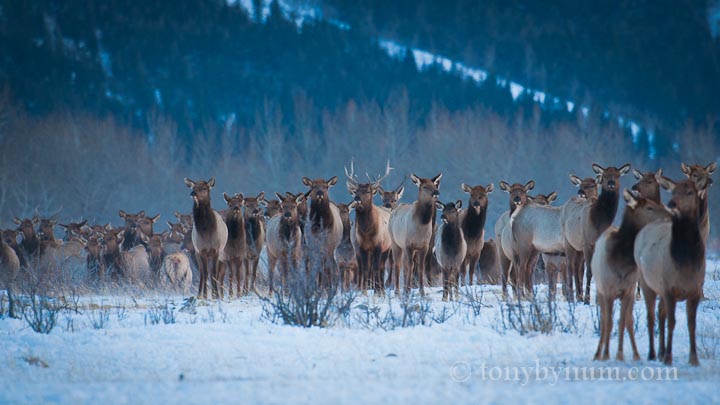
Photographing wild animals in the Central and Northern Rocky Mountains, during the cold season, particularly the later part of winter when animals are feeling the stress, takes special considerations. Late winter and onto early spring is the time when wildlife are weakest and most vulnerable. Food is more scarce, fat reserves from last fall are nearly gone, and ice has formed where snow once covered the ground. As the snow melts and refreezes it hardens into ice, making it difficult for wildlife to paw though and gain access to much needed nutrients. This combination of food shortage and deteriorating body condition results in wild animals becoming exceedingly vulnerable to predation, illness, and even death.
During the late winter, I’m careful not to put too much pressure on my subjects. I like to keep a safe distance and approach wildlife in such a manner that my actions don’t cause them to flee or waste a lot of energy seeking cover. Should I spook a herd or even a single animal I try to stay put, and reduce my movement as much as possible until they are well out of sight - I don't want them to think I'm pursuing them. Sometimes, no matter how careful or considerate you are, you're going to spook wildlife, particularly if you don't know they are around. In one case we did spook some elk and this is one photograph I grabbed as they raced to put some distance between us. After they passed, we backed out and left the area.
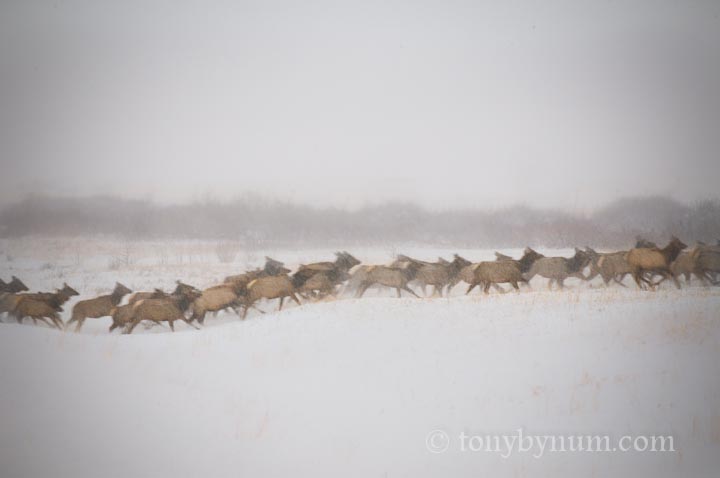
No matter how careful you are, at some point, you're going to disturb some animals. Just be sure you move slow and give them right amount of distance. If you find that your subjects are alert but not overly concerned with your presence, it’s likely safe for you to continue shooting, just don't push it!
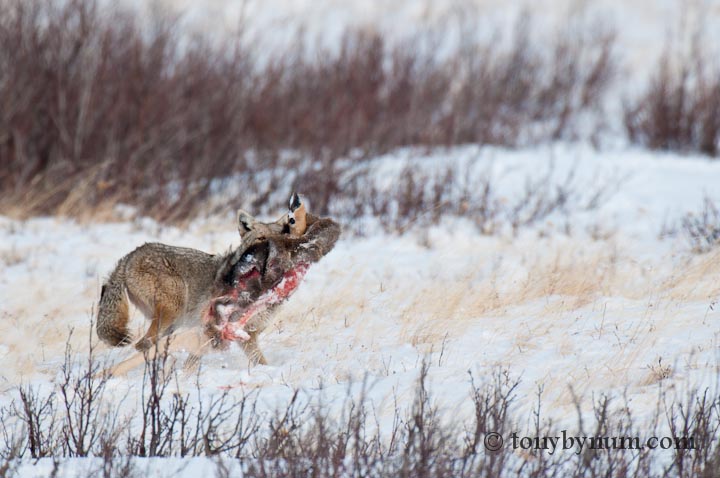
On day two we found several coyotes feeding on recent mule deer carcass. It was many miles away from the cats we were initially after, so I suspect the coyotes took the mule deer down within a day or so of this photograph. Based on the location, the snow depth, and the size of the coyotes around the kill, they would have had little problem taking this deer down. There is a chance however that it was a cat kill, but we did not find any cat tracks in the area so we assume the coyotes had something more to do with the death.
So, enjoy winter wildlife photography, and by all means don’t stay home, just be respectful and pay attention to local conditions and adjust your approach, as necessary, to ensure you don't disturb animals beyond their capacity.