
How I Learned Photography - Part 1 - Observe, Feel, Create, Execute - Just keep doing it!
This blog entry is in responce to an often asked question, and one recently posed by a reader named Mac. The question, "How did you learn photography, and where do I get my inspiration?" I'm going to answer this it two parts. I will follow up with a second post that will cover the inspiration portion. Keep in mind, the two things, learning, and inspiration, are inextricably linked. Here's my response to Mac's question.
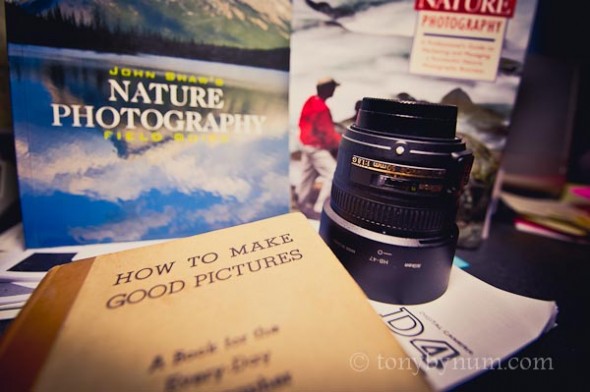
Mac, thank you for your question, and for the generous compliment. So, the question, "How did you learn photography." The answer, I just did. Thank you, next question. Not really. In truth, it was that simple but it took a lot of time and discovery. Very early in my photography career, I read a quote that I think has done more for my learning than any other. It's a quote by Eliot Porter, an American photographer best known for his colorful landscapes, "The more you photograph, the more you realize what can be photographed and what can't be photographed. You just have to keep doing it."
Learning photography, in the modern era, means first understanding that photography is a system. It includes everything around us including the camera, lens, computer, printing, philosophy, and knowledge about the subjects that interest you. My learning has all been organic. By that I mean I shoot what inspires me, more on that in the next post. As you know, I'm not a classically trained photographer - or artist either for that matter. No one in my circles ever was a photographer, although my mother does have a passion for art and can draw. So, because I've never had any formal training (which is really strange these days because who even knows what that means anymore with all the access to media and teaching aids on the internet). I just worked hard and tried to use all the tools available to me, including reading a few books, which I'll list for you at the bottom of this post, paying attention to the world around me, and always asking, "Why." So, if I'm not classically trained, which I think a classically train photographer could probably tell by looking at my work, how did I learn it?
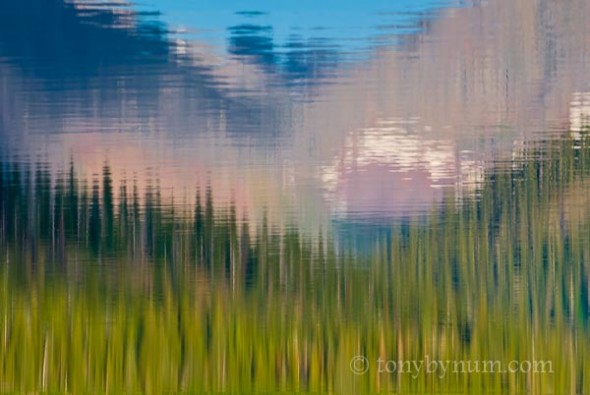
It's kind of a chicken and an egg thing but in this case I think I had the chicken first. Once you pick up a camera, no matter what you already know about anything, expressing yourself is relative to the view you see though the lens. In other words, NO matter what you know, you still have to deliver a concept or a story though the medium. My medium is the digital single lens reflex camera. So, the more you know about cameras and lenses, and now digital data, the better photographer you should be able to become - in theory. Learning photography, for me, meant learning about the things that interested me. I followed my passion for wildlife, land, people, nature, hunting, fishing, ranching, rodeo, cowboying, adventure, and in general, the world I live in. I learned photography while I was learning about life . . . I just pay attention, close attention to light, and I learned to observe space - everything has a context, or exists within spacial limits. You have to learn to understand that concept if you want to tell stories with your imagery.
The camera came early, but not in a significant way. I got serious with a camera about 15 years ago . . . I did go to college (see my recent post about going to college), but only by accident. I mean, I never really had a plan to go, I just lucked into a college, and that it not been for my high school counselor, it would never have known I existed. I wound up going to college where I knew my priority was still could be fishing, hunting, cows, tractors, sagebrush, dry air, and big, open spaces! Once there, my interest in the world exploded. However, I disliked the traditional class setting. I worked harder, I feel, for both my grades and my rent than almost everyone around me. I held three or more jobs to pay my way. After receiving an undergraduate degree in Geography and Land Studies, with a minor in Environmental Studies, I stuck with working cattle, riding horses, building fences, chasing fish, elk and deer, hanging out with cool people, and driving tractors. Not long after that I was offered a full scholarship to graduate school - which I took with one week's notice - and wound up with straight "A's" graduating with a masters in science wherein I studied federal and state watershed, wildlife, and habitat restoration policy. Are you still with me? I hope so, and I hope you're getting a better picture of how I learned photography.
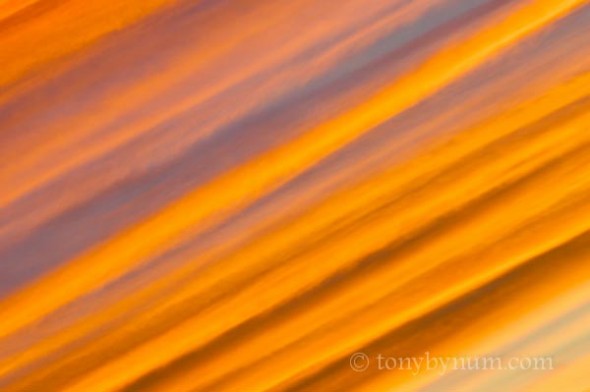
At every step I took photographs of what interested me. Along the way I learned about light, cameras's and well, action! Later, after working and traveling to all but two states in the Union, while working in WA D.C., (the irony is that I live about three blocks from National Geographic for about a year and walk by it everyday on my way to work - I stopped in one time to look at Sir Edmond Hillary's old gear used to climb Everest, but I never though about talking to them about photography - missed the boat on that one). About a year before I left the inner circle of Washington, D.C., I started creating photographs everyday. I photographed the things that made me anxious; tall buildings, narrow streets, trash, power poles with countless cables and boxes, patterns in concrete as though whoever designed them was trying to give the inter-city some natural texture. I photographed things that made me feel something, and I did it a lot! I think, though the process of learning photography, I've been able to show myself what the world around me really looks like. I think I learned that photography is about discovery and more than that, it's about discovering one's self. As if, though my own photographs, I could see my life and even edit the story. As it turned out, I was learning about who I had become.
Finally, after growing tired of the straight lines, hard black and gray pavement, the smell of the city and the speed at which it operated, I had to make a change. I think I was to far from the people, and to close to a place where the only dirt settled on windshields of cars and gathered in the cracks and crevices of the streets. Rivers were present in gutters after a hard rain, and there were no fish in them. I needed to get back to the West - so I left. Learning though life's experience, and pushing that learning though a medium - the camera - which is all about passion and need, taught me photography. There were a few other tools I used along the way.
Books and other things I liked and that taught me something useful about photography.
1. John Shaw's book, "Nature Photography" - John is a master, and great at explaining complicated details.
2. A book titled, "Light, Science and Magic," by Hunter and Fuqua - buy the new digital version. I think I learned more about photography (or about light, and photography is all about seeing and capturing light) from this book than any other.
3. I joined a photography group when I lived in Bethesda, MD where I learned a lot in the short time I was there about composition and cropping. Having your photos critiqued, or watching as other's have their photographs critiqued is horribly valuable!
4. I've listened to a few great photographers, on the few times that I was around any, and learned a lot of truth's from their stories. What I picked up from them was that there is no easy road. Photography, like anything you do well, takes practice, nerve, and execution. Inspiration (I'll cover this in more detail in a future post) comes from the heart. One shot wonders happen occasionally, but to stay relevant you must produce and execute. You also much find your style and continue to create relevant work . . . I'm not done learning photography, I don't think I will ever be done learning photography.
I hope this helps. The next time I delve into this subject I'll explain what's going on in my head (the best I can) when I create photographs that matter . . .
It's weird, but it's real, relevant, and right!
Tony